
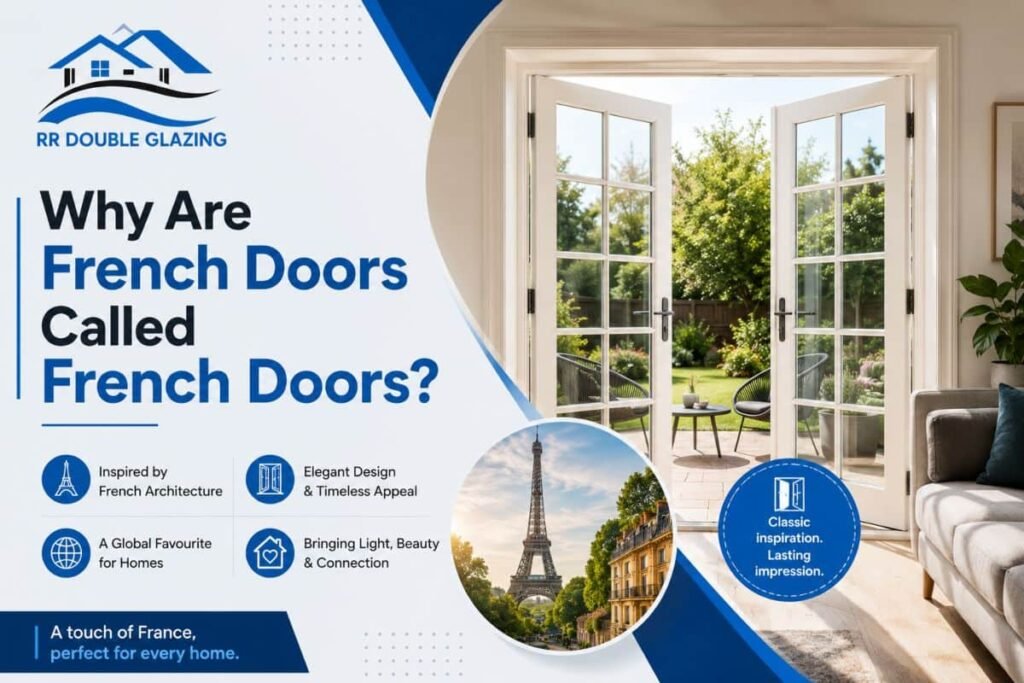
French doors are called French doors because they originated in 17th-century France and were inspired by Renaissance architecture, which focused on natural light, symmetry, and open living spaces. Their design features large glass panels that allow more daylight into a home and create a seamless connection between indoor and outdoor areas. The name reflects their French architectural origin rather than where they are made today.
French doors have become one of the most recognisable and desirable features in modern homes. Whether opening onto a garden, patio, balcony, or connecting two interior spaces, these elegant doors are admired for their timeless appearance and ability to flood a property with natural light.
Despite their popularity, many homeowners still ask the same intriguing question: Why are French doors called French doors?
The answer takes us back several centuries to a fascinating period in European architectural history. French doors are more than simply attractive glazed doors. They represent a design philosophy that transformed how buildings interacted with light, nature, and living spaces.
In this guide, we will explore the origins of French doors, their historical development, why they became associated with France, and how they evolved into one of the most sought-after home improvement features in the UK.
Understanding What French Doors Are
Before exploring their history, it is important to understand what makes a French door different from other types of doors.
A French door typically consists of two hinged door panels that open either inward or outward. The defining feature is the large glazed sections that extend through most of the door’s height.
Unlike solid timber doors, French doors prioritise visibility, natural light, and openness. Their glass panels create a visual connection between spaces while maintaining practical access.
Today, French doors are commonly installed in:
- Living rooms
- Kitchens
- Conservatories
- Garden rooms
- Patios
- Balconies
- Dining areas
Their versatility makes them suitable for both traditional and contemporary properties.
The Origins of French Doors
To understand why French doors are called French doors, we need to travel back to 17th-century France.
During this period, France experienced significant cultural and architectural development. The Renaissance movement had spread across Europe, bringing new ideas about design, proportion, symmetry, and beauty.
Architects began moving away from the dark, heavily enclosed structures of the medieval period. Instead, they sought ways to create brighter interiors filled with natural light.
Large windows became increasingly desirable because they allowed sunlight to enter buildings and created a stronger connection with outdoor landscapes.
However, creating expansive glass openings presented challenges. Glass manufacturing was expensive, and structural techniques were still developing.
The solution was ingenious.
Architects designed tall double doors featuring multiple glass panes. These doors functioned like windows while also providing access between rooms and gardens.
These early designs became the foundation for what we now call French doors.
The Influence of Renaissance Architecture
The Renaissance had a profound influence on architectural styles throughout Europe.
French architects embraced principles such as:
- Symmetry
- Balance
- Natural light
- Geometric proportions
- Elegant visual harmony
Large glazed openings became symbols of sophistication and wealth.
French doors perfectly reflected these ideals. They created symmetry within a building’s façade while maximising daylight.
At a time when artificial lighting was limited to candles and oil lamps, increasing natural light significantly improved indoor comfort.
This practical benefit contributed greatly to the popularity of French doors throughout France and eventually beyond its borders.
Why They Became Known as French Doors
The name itself is relatively straightforward.
Because the design originated in France and became strongly associated with French architectural styles, the doors became known internationally as French doors.
Just as certain architectural features are linked to their countries of origin, these elegant glazed doors carried their French identity wherever they were adopted.
The name does not necessarily indicate where the doors are manufactured today.
Instead, it recognises the historical and architectural roots of the design.
Over time, the term became universally accepted throughout Europe and later around the world.
The Evolution of French Doors Through History
French doors have undergone significant changes since their original introduction.
Early Designs
The earliest versions featured wooden frames and numerous small glass panes.
Glass production methods at the time limited the size of individual panes, resulting in doors divided into multiple sections.
Victorian Period
The Industrial Revolution dramatically improved glass manufacturing.
Larger panes became more affordable and widely available.
Victorian homeowners embraced French doors because they complemented the era’s emphasis on decorative architecture and garden living.
Twentieth Century
Advances in engineering introduced stronger materials such as steel, aluminium, and later uPVC.
These innovations allowed slimmer frames and larger glazed areas.
Modern French Doors
Today’s French doors offer:
- Enhanced security
- Double glazing
- Improved thermal efficiency
- Noise reduction
- Low-maintenance materials
- Contemporary design options
While the technology has evolved, the original concept remains remarkably similar to the French designs developed centuries ago.
Why French Doors Became So Popular
The enduring popularity of French doors is no accident.
They offer a unique combination of beauty and practicality.
Natural Light
One of the greatest advantages of French doors is their ability to maximise daylight.
Homes feel brighter, larger, and more welcoming when natural light flows freely through living spaces.
Indoor-Outdoor Living
French doors create a seamless transition between interior and exterior areas.
This connection becomes particularly valuable during warmer months when gardens and patios become extensions of the home.
Improved Views
Large glazed panels provide unobstructed views of outdoor spaces.
Whether overlooking a landscaped garden or a countryside setting, French doors help homeowners enjoy their surroundings.
Timeless Style
Unlike some architectural trends that come and go, French doors have remained fashionable for centuries.
Their elegant appearance works equally well in traditional cottages and modern new-build properties.
French Doors and Modern British Homes
French doors have become a staple feature throughout the UK.
Many homeowners choose them as part of renovation projects because they improve both appearance and functionality.
They are particularly popular in:
- Rear extensions
- Kitchen renovations
- Garden rooms
- Conservatories
- Open-plan living areas
In regions where homeowners prioritise natural light, demand continues to grow.
For example, many property owners seeking French Windows in London often favour matching French door designs to create a consistent architectural style throughout their homes.
Similarly, homeowners researching French Doors in Kent frequently choose complementary door installations to maximise daylight and enhance garden access.
Are French Doors Still Relevant Today?
Despite the popularity of bifold and sliding doors, French doors remain highly relevant.
Many homeowners prefer them because they offer:
- Classic aesthetics
- Lower installation costs
- Traditional character
- Simpler maintenance
- Excellent energy efficiency
French doors provide a balanced solution that combines elegance with practicality.
Their continued popularity demonstrates the strength of a design concept that originated more than three centuries ago.
Common Misconceptions About French Doors
Several myths surround French doors.
They Are Only Suitable for Traditional Homes
This is incorrect.
Modern French doors are available in contemporary styles that complement minimalist architecture.
They Are Not Energy Efficient
Modern double and triple-glazed French doors achieve excellent thermal performance.
They Are Less Secure
Today’s French doors feature advanced locking systems that provide high levels of security.
They Always Require Planning Permission
Many homeowners ask, Do You Need Planning Permission for French Doors?
In most situations, French doors can be installed under permitted development rights. However, listed buildings, conservation areas, and certain property types may require approval.
How French Doors Reflect French Design Philosophy
The true significance of French doors extends beyond their appearance.
They embody several key principles associated with French architecture:
Light
French designers sought to maximise daylight long before electricity existed.
Elegance
Proportion and symmetry remain central to French architectural traditions.
Connection
French doors blur the boundaries between interior and exterior spaces.
Practical Beauty
Their design serves both functional and aesthetic purposes.
This combination of practicality and refinement helps explain why the concept has survived for centuries.
Choosing French Doors Today
Modern homeowners have numerous options when selecting French doors.
Popular frame materials include:
uPVC
Affordable, durable, and energy efficient.
Aluminium
Slim profiles and contemporary aesthetics.
Timber
Traditional appearance and natural character.
Composite Materials
Combining the strengths of multiple materials for enhanced performance.
Many homeowners work with specialists such as RR Double Glazing to find French door solutions that suit both their property’s style and their practical requirements.
The Lasting Legacy of French Doors
Few architectural features have enjoyed the longevity of French doors.
Their story begins in Renaissance-era France but continues today in homes across the world.
What started as an innovative way to introduce more natural light into buildings evolved into one of the most iconic door designs ever created.
The reason they are called French doors is simple: they were born from French architectural thinking. Yet their influence extends far beyond France itself.
Whether installed in a period property, a modern extension, or a contemporary garden room, French doors continue to deliver the same benefits that made them revolutionary centuries ago.
Conclusion
French doors are called French doors because they originated in France during the 17th century, where architects embraced designs that maximised light, symmetry, and openness. Their distinctive glazed appearance reflected Renaissance architectural ideals and quickly gained popularity throughout Europe.
Today, French doors remain one of the most elegant and practical features available to homeowners. Their timeless design, ability to brighten interiors, and seamless connection between indoor and outdoor spaces ensure they continue to be a preferred choice in homes across the UK and beyond.
Frequently Asked Questions
Why are French doors called French doors?
French doors are named after their French architectural origins. They were developed in 17th-century France as part of a design movement focused on light and symmetry.
Were French doors invented in France?
Yes. French doors originated in France during the Renaissance period and later spread throughout Europe and the rest of the world.
What makes a door a French door?
A French door typically consists of two hinged doors with large glass panels extending through most of their height, allowing maximum natural light.
Are French doors still popular in the UK?
Yes. French doors remain one of the most popular choices for patios, gardens, conservatories, and home extensions due to their timeless appearance.
What is the difference between French doors and patio doors?
French doors usually have two hinged panels that open from the centre, while patio doors typically slide horizontally along a track.
Are French doors energy efficient?
Modern French doors with double or triple glazing can provide excellent insulation and energy efficiency.
Can French doors open inwards or outwards?
Yes. French doors can be configured to open either inward or outward, depending on the property’s layout and homeowner preference.
Why did French architects create French doors?
French architects wanted to increase natural light and create a stronger visual connection between indoor and outdoor spaces.
Are French doors suitable for modern homes?
Absolutely. Modern French doors are available in contemporary materials and designs that suit both traditional and modern properties.
Do French doors add value to a property?
In many cases, yes. French doors can improve aesthetics, increase natural light, and enhance garden access, all of which can appeal to potential buyers.