
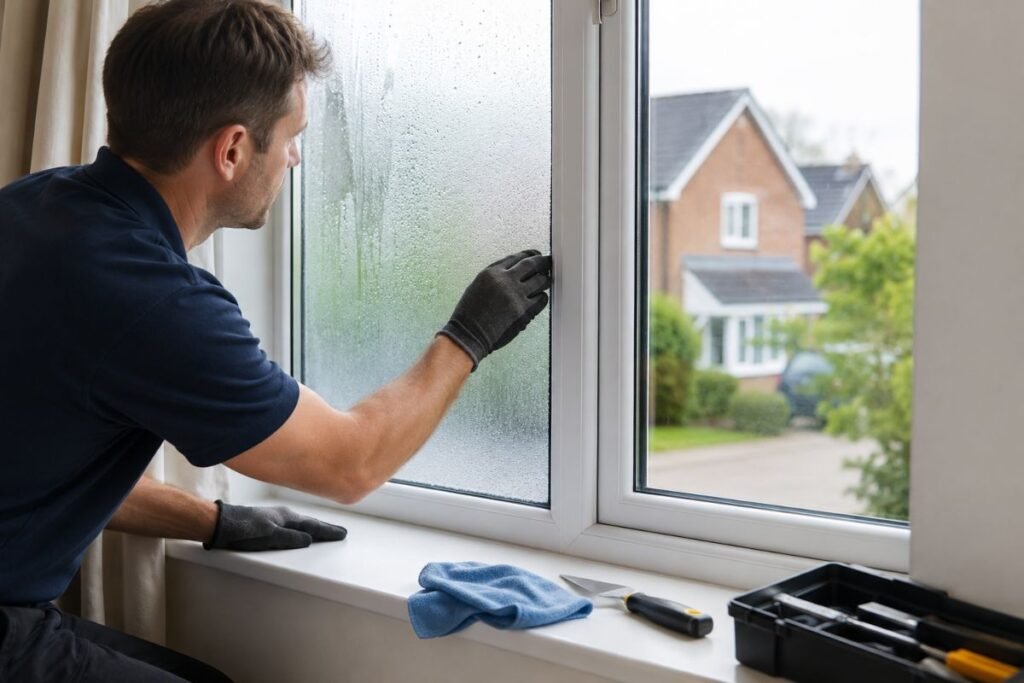
Condensation trapped between panes means the sealed unit has failed and moisture has entered the gap. Cleaning alone will not fix this, since the fault sits inside the sealed glass. The genuine solution is replacing the sealed glazing unit itself, either by fitting new glass into the existing frame or, if the frame is also worn, replacing the whole window.
How to Fix Condensation in Double Glazing
There are few things more frustrating than glancing at a window on a cold morning and finding a hazy, cloudy patch sitting right in the middle of the glass, no matter how many times you wipe it. If this sounds familiar, the problem almost certainly is not dirt, grime, or a smear you have missed. It is condensation trapped between the panes of your double glazing, and it is a sign that the sealed unit itself has developed a fault.
This guide explains exactly why this happens, why ordinary cleaning never solves it, and what genuinely needs to happen to put things right, so you can approach the problem with a clear plan rather than endless futile wiping.
Understanding What Is Actually Happening
Double glazed units are built as sealed packages, with two panes of glass held a fixed distance apart and a layer of dry air or gas trapped in between. This gap is what gives double glazing its excellent insulating properties, keeping heat in and cold out far more effectively than a single pane ever could.
Why the Seal Matters So Much
A strip of sealant and a spacer bar run around the edge of the unit, keeping that internal gap completely sealed off from the outside world. As long as this seal remains intact, moisture from the surrounding air has no way to reach the space between the panes.
What Happens Once the Seal Gives Way
Over time, exposure to sunlight, temperature swings, and general ageing can cause this seal to weaken and eventually fail. Once that happens, humid air finds its way into the gap, and when temperatures drop, that moisture condenses on the inside faces of the glass, exactly where no cloth can reach.
Recognising the Signs Correctly
It is worth being confident about what you are actually seeing before assuming the worst, since not every cloudy window points to the same underlying cause.
Condensation between double glazed windows typically appears as a persistent haze or fogging that sits within the glass itself rather than on either surface, and it tends to worsen noticeably during colder weather before easing slightly once temperatures rise again. Unlike surface condensation, it never wipes away, no matter how thoroughly you clean the inside or outside of the window.
Distinguishing This from Surface Condensation
Ordinary surface condensation forms on the inside face of a window due to humidity in the room, and it wipes away easily with a cloth. This is a normal, everyday occurrence in many homes and is not a sign that anything is wrong with the glazing itself.
Checking for Visible Staining or Mineral Deposits
In units that have had a failed seal for some time, mineral deposits or a faint white residue can sometimes build up on the inner glass surfaces, left behind as trapped moisture evaporates and condenses repeatedly. This is a strong indicator that the fault has been present for a while rather than being a very recent development.
Why This Happens in the First Place
A number of factors contribute to a failed double-glazing seal, and understanding them helps explain why this problem tends to appear more often in some windows than others.
Age and General Wear
Most sealed units are designed to last for many years, but no seal lasts forever. Older installations, particularly those approaching or exceeding two decades old, are considerably more likely to develop this kind of fault simply through natural material degradation over time.
Poor Manufacturing or Installation
Occasionally, a unit fails prematurely due to a manufacturing defect or a fitting error that placed unnecessary stress on the seal from the very beginning. In these cases, failure can occur within just a few years rather than after decades of otherwise normal use.
Extreme Temperature Fluctuations
Windows that face significant temperature swings, such as south facing glass exposed to strong sunlight followed by cold nights, experience more expansion and contraction than sheltered windows. This repeated movement gradually places extra strain on the seal, accelerating wear over time.
Why You Cannot Simply Clean the Problem Away
It is a natural instinct to reach for glass cleaner and a cloth the moment a window looks cloudy, but no amount of cleaning will touch condensation sitting between two sealed panes of glass, since there is simply no way to physically access that space without breaking the unit apart.
Some homeowners come across suggestions online involving drilling small holes into the unit to allow moisture to escape, sometimes paired with claims about drying out the cavity. While this occasionally offers a very temporary, cosmetic improvement, it permanently compromises the seal and insulating performance of the unit, and the fogging almost always returns, often worse than before.
What Genuinely Fixes the Problem
Once a seal has failed, there is really only one reliable solution, and that is replacing the glazing unit itself rather than attempting to patch or clean the existing one.
Replacing Just the Glazed Unit
In many cases, particularly where the surrounding frame is still in good condition, it is possible to fit a brand-new sealed unit into the existing frame without replacing the whole window. This is usually the more cost-effective route and can often be completed in a single visit.
Weighing Up Double Glazing Repair Versus Replacement
The decision around double glazing repair vs replacement usually comes down to the condition of the frame itself. If the frame has also deteriorated, developed draughts, or is showing its own signs of age, replacing the entire window often makes more sense than investing in a new unit that will eventually be paired with a tired, underperforming frame.
A Common Myth Worth Clearing Up
Many people search online for information about window unit re-gassing, hoping that simply topping up the argon gas refill between the panes might solve their fogging problem without needing a full replacement. Unfortunately, this is not a genuine solution, since the seal itself has already failed by the time moisture has entered the unit, meaning any newly added gas would simply escape again through the same gap, along with fresh humid air continuing to enter from outside.
Preventing the Problem from Recurring
While seal failure is largely a matter of time and material quality, a few sensible habits can help extend the working life of your windows and catch any early warning signs before they worsen.
Worth keeping in mind going forward:
- Check windows periodically for the earliest signs of internal fogging
- Keep frames and drainage channels clear of dirt and debris
- Choose quality units and reputable installers for any replacement work
- Address failed seals promptly rather than living with reduced insulation
Getting a Professional Assessment
If you are unsure whether a particular window genuinely needs a new unit or a full replacement, having a specialist take a look properly is always worthwhile before spending money on the wrong fix.
Experienced suppliers such as RR Double Glazing can assess the condition of both the glazing and the surrounding frame, offering an honest recommendation on whether a simple unit swap will do the job or whether the time has come for a complete replacement.
Final Thoughts
Cloudy, misted double glazed windows are frustrating, but they are also a straightforward problem once you understand what is genuinely happening behind the glass. No amount of cleaning, drilling, or gas top ups will resolve a failed seal, since the only lasting fix is replacing the affected unit, either on its own or alongside the frame if that has also seen better days. With the right repair carried out properly, your windows can return to being clear, efficient, and completely fog free for years to come.
Frequently Asked Questions
Why has condensation suddenly appeared in a window that has never had this problem before?
Seals do not fail all at once, but rather weaken gradually until they finally give way, which is why the fogging can appear to happen suddenly even though deterioration has been building for some time beforehand.
Do foggy windows always mean the same underlying fault?
Generally, yes, persistent fogging trapped within the glass almost always points to a failed seal, though the severity and speed at which it develops can vary. It is not typically dangerous in itself, though it does mean reduced insulating performance and higher heating costs until resolved.
How much does it cost to replace a single misted glazing unit?
Costs vary depending on the size of the window and the type of glazing chosen, though replacing just the sealed unit is generally far more affordable than replacing the entire window and frame.
Can only one window in a set of several develop this problem?
Yes, seal failure often affects individual units rather than every window at once, particularly where certain windows face more direct sunlight or temperature extremes than others around the property.
Will home insurance cover the cost of fixing condensation in double glazing?
This is generally considered wear and tear rather than accidental damage, so most standard home insurance policies are unlikely to cover it, though it is always worth checking the specific terms of your own policy.
How long does it take to replace a failed double-glazing unit?
A straightforward unit replacement, where the existing frame remains in good condition, can often be completed within a single visit, sometimes within a couple of hours depending on the number of windows involved.
Does a failed seal affect the security of the window?
A failed seal on its own does not usually compromise security directly, though a unit that has deteriorated significantly may also show signs of weakness elsewhere, making a full inspection worthwhile alongside addressing the condensation itself.