
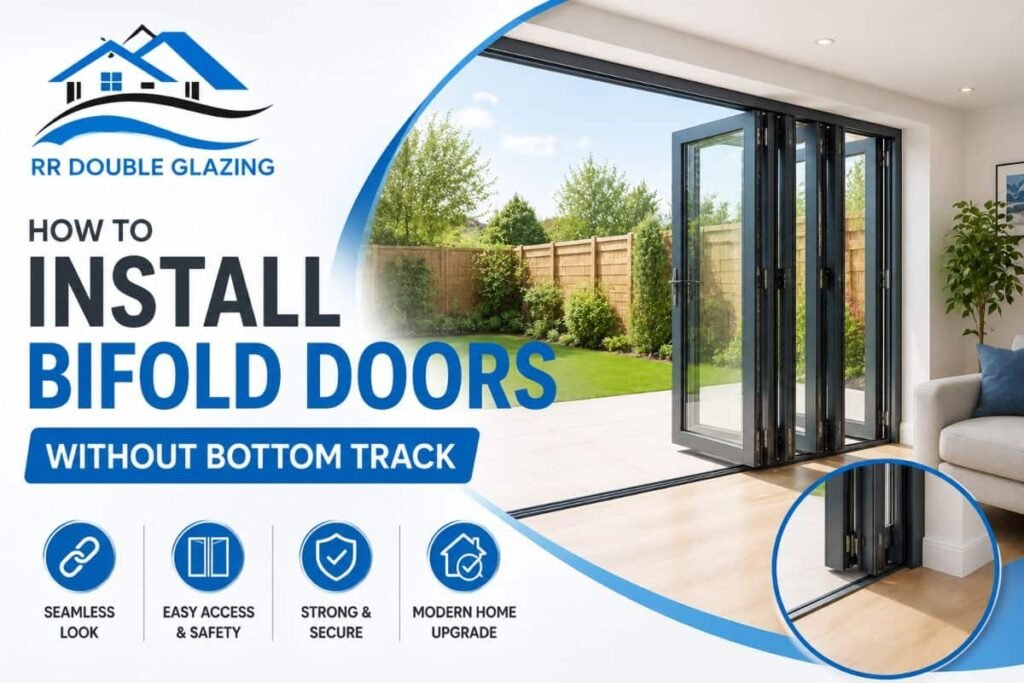
To install bifold doors without a bottom track, use a top-hung bifold door system that is supported by a strong overhead track. Measure the opening accurately, ensure the lintel can support the door’s weight, install the frame level, hang the door panels, and adjust the rollers for smooth operation. This creates a seamless threshold, improves accessibility, and provides a modern, clean finish.
Bifold doors have become one of the most popular choices for homeowners looking to create stylish, open, and practical living spaces. Their sleek appearance, ability to maximise natural light, and smooth folding operation make them ideal for both internal and external applications. Traditionally, bifold doors are installed with both top and bottom tracks, but many homeowners now prefer installing bifold doors without a bottom track for a cleaner and more modern finish.
A bottom-track-free system removes the raised threshold, creating a seamless transition between indoor and outdoor areas while improving accessibility. This type of installation requires precision because the entire weight of the doors is supported by the upper track and structural framework.
In this comprehensive guide, you’ll learn exactly how to install bifold doors without a bottom track, the tools you’ll need, preparation steps, common mistakes to avoid, maintenance advice, and whether this installation method is suitable for your property.
What Is a Bottom-Track-Free Bifold Door?
A bottom-track-free bifold door uses a heavy-duty top-hung system rather than relying on a floor-mounted track. The doors hang from rollers attached to a reinforced overhead track, allowing them to glide smoothly while keeping the floor completely clear.
Instead of the bottom track carrying the weight, discreet guide pins or floor pivots help maintain alignment during operation.
Benefits of Installing Bifold Doors Without a Bottom Track
Choosing a trackless threshold offers several advantages.
Cleaner Appearance
Without a visible floor track, the room enjoys a more minimalist and contemporary look.
Better Accessibility
A flush threshold removes trip hazards, making the doors easier to use for children, elderly family members, wheelchair users and anyone with reduced mobility.
Easier Cleaning
Traditional bottom tracks often collect dirt, leaves, dust and debris. Removing the bottom track makes cleaning much simpler.
Improved Indoor-Outdoor Flow
Trackless bifold doors create a continuous floor finish between your home and garden, making entertaining spaces feel larger.
Modern Property Value
Many buyers appreciate premium architectural features such as flush thresholds, which can enhance the overall appeal of a property.
Can Every Bifold Door Be Installed Without a Bottom Track?
No.
Only top-hung bifold systems specifically designed for trackless installations should be installed without a bottom track.
The supporting wall or structural beam must be capable of carrying the full weight of the door system.
If the opening lacks sufficient structural strength, additional reinforcement may be required before installation.
Tools You’ll Need
Before starting, gather the following equipment:
- Spirit level
- Measuring tape
- Drill and drill bits
- Impact driver
- Screwdrivers
- Fixing screws
- Wall plugs
- Silicone sealant
- Rubber mallet
- Safety glasses
- Protective gloves
- Step ladder
- Adjustable spanners
- Packers and shims
Materials Required
Ensure you have all necessary materials before installation.
- Top-hung bifold door kit
- Heavy-duty overhead track
- Roller assemblies
- Hinges
- Floor guide pin
- Door handles
- Locking hardware
- Weather seals
- Frame fixing brackets
- Sealant
Step 1: Measure the Opening Carefully
Accurate measurements are essential.
Measure:
- Width
- Height
- Diagonal corners
- Floor level
- Wall plumb
Even small measurement errors can affect door alignment.
If the opening is uneven, make corrections before installing the frame.
Step 2: Check Structural Support
This is the most important stage.
Since there is no bottom track supporting the weight, the lintel above the opening must be strong enough to carry the complete load.
If installing external aluminium bifold doors, the structural support becomes even more critical because these doors are significantly heavier.
Consult a structural engineer if you have any doubts.
Step 3: Assemble the Door Frame
Lay the frame sections on a flat surface.
Connect each section according to the manufacturer’s instructions.
Check all corners remain perfectly square before tightening the fixings.
Do not overtighten screws until final alignment has been confirmed.
Step 4: Position the Frame
Lift the completed frame into the opening.
Use packers beneath the side jambs if required.
Check:
- Vertical alignment
- Horizontal level
- Square corners
Use a spirit level throughout the process.
Temporary clamps can help hold the frame securely while adjustments are made.
Step 5: Secure the Frame
Drill holes through the frame into the surrounding wall.
Install suitable fixings depending on whether the wall is:
- Brick
- Concrete
- Timber
- Steel
Secure each fixing gradually while continually checking that the frame remains level.
Avoid forcing the frame out of alignment.
Step 6: Install the Top Track
The overhead track is the heart of the system.
Position it precisely according to the manufacturer’s measurements.
Fix the track securely into the structural beam.
Even a few millimetres of movement can affect door operation later.
Double-check all fixings before continuing.
Step 7: Fit the Roller Carriages
Attach the roller assemblies to the top of each door panel.
Ensure:
- Rollers rotate freely
- Bearings move smoothly
- Fixings are tightened evenly
High-quality rollers make a significant difference to long-term performance.
Step 8: Hang the Door Panels
Carefully lift each panel into the overhead track.
Depending on the size of the doors, two or more people may be required.
Once hung:
- Check movement
- Confirm smooth sliding
- Ensure equal spacing
- Verify vertical alignment
Make any necessary adjustments before fitting the remaining panels.
Step 9: Install Floor Guide Pins
Although there is no bottom track, most systems still use discrete guide pins.
These prevent unwanted door swing while allowing free movement.
Install the guide exactly where specified.
Incorrect positioning may cause binding during operation.
Step 10: Connect the Hinges
Secure the hinges between each folding panel.
Check that every hinge moves freely.
Operate the doors several times before fully tightening all hinge screws.
Step 11: Install Handles and Locks
Fit:
- Handles
- Lock cylinders
- Multipoint locking mechanisms
- Shoot bolts
Test each component thoroughly.
The locking system should engage smoothly without forcing.
Step 12: Adjust Door Alignment
Most premium bifold systems include adjustable rollers.
Use these adjustments to achieve:
- Even panel spacing
- Smooth folding
- Proper weather seal compression
- Correct closing pressure
Take your time during this stage.
Small adjustments produce significant improvements.
Step 13: Seal Around the Frame
Apply external-grade silicone sealant around the perimeter.
This helps prevent:
- Water ingress
- Draughts
- Air leakage
- Moisture damage
Ensure the sealant bead is continuous and neat.
Testing the Installation
Once complete:
- Open all panels
- Close all panels
- Check locking
- Inspect seals
- Listen for rubbing
- Confirm smooth operation
Any resistance should be corrected immediately.
Common Installation Mistakes
Many installation problems arise from avoidable errors.
Weak Structural Support
The biggest mistake is installing a top-hung system without adequate structural reinforcement.
Poor Measurements
Incorrect measurements often result in uneven gaps and difficult operation.
Frame Out of Square
Even slight twists can affect roller movement.
Overtightening Fixings
Excessive tightening may distort the frame.
Incorrect Roller Adjustment
Improper adjustments reduce the lifespan of the hardware.
Maintenance Tips
A properly installed trackless bifold door requires minimal maintenance.
Regularly:
- Clean the overhead track
- Lubricate rollers
- Inspect hinges
- Tighten loose fixings
- Clean weather seals
- Remove dust from guide pins
Routine care keeps the doors operating smoothly for many years.
Are Trackless Bifold Doors Worth It?
For many homeowners, the answer is yes.
They provide:
- Modern appearance
- Seamless flooring
- Improved accessibility
- Easier cleaning
- Excellent functionality
However, professional installation is often recommended because structural accuracy is critical.
Whether you’re upgrading a garden entrance or modernising your living area, a top-hung bifold system offers an elegant and practical solution.
At RR Double Glazing, experienced installers understand the structural requirements needed to ensure bifold doors operate safely, smoothly and efficiently for years to come.
Final Thoughts
Learning how to install bifold doors without a bottom track is about much more than simply removing the lower rail. The success of the installation depends on precise measurements, a structurally sound opening, careful alignment and a high-quality top-hung system.
When installed correctly, trackless bifold doors provide a sleek, modern finish with uninterrupted flooring, improved accessibility and effortless operation. Taking the time to prepare properly and following each installation step carefully will help ensure a durable and reliable result that enhances both the appearance and functionality of your home.
Frequently Asked Questions
Can bifold doors work without a bottom track?
Yes. Top-hung bifold door systems are specifically designed to operate without a bottom track. The overhead track supports the weight while the floor guide pins maintain alignment.
Are trackless bifold doors strong enough?
Yes. When installed on a properly reinforced structural opening with high-quality hardware, trackless bifold doors are extremely durable and designed to support substantial weight.
Do bifold doors without bottom tracks need professional installation?
While experienced DIY enthusiasts may install them, professional installation is recommended because precise alignment and structural support are essential for safe operation.
What supports bifold doors without a bottom track?
A heavy-duty overhead track attached to a structurally reinforced lintel carries the full weight of the doors, while discreet floor guides prevent side-to-side movement.
Are bottom-track-free bifold doors suitable for external use?
Yes. Many modern aluminium bifold door systems are specifically designed for external installations and provide excellent weather resistance with flush thresholds.
How do you keep trackless bifold doors running smoothly?
Regularly clean the top track, lubricate rollers, inspect hinges, tighten fixings and ensure guide pins remain free from dirt and debris.
Can existing bifold doors be converted to a trackless system?
In most cases, no. Standard bottom-supported bifold doors are not designed to operate safely without their bottom track. A purpose-built top-hung system is usually required.