
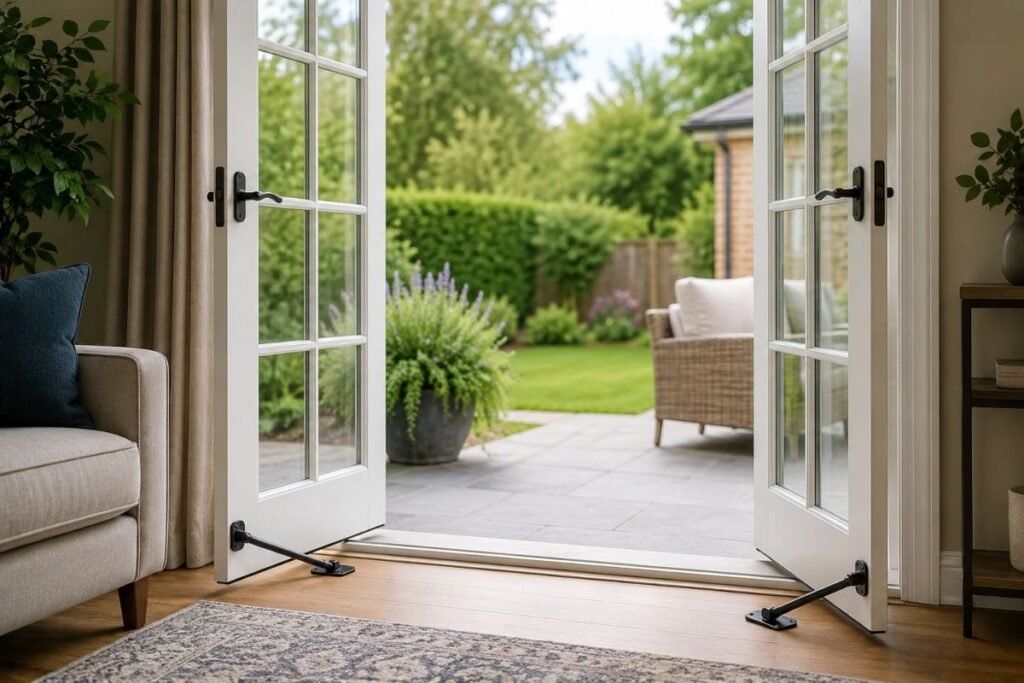
To keep French doors, open reliably, choose a holding method suited to how often they are used. Occasional use is best served by a rubber wedge or weighted stop, while daily use benefits from a permanently fitted stopper, hinge-based catch, or magnetic fitting that holds the door securely without relying on anything being placed or moved each time.
Practical Ways to Stop French Doors Swinging Shut
Few things spoil a lazy summer afternoon quite like French doors that will not stay put. You open them to let the garden breeze drift through the kitchen, walk away for two minutes, and come back to find them shut again, as if they had never been touched. It is a small annoyance, but one that crops up again and again in homes across the country, particularly once the weather turns warm enough to want doors open for hours at a time.
The good news is that this is one of the easiest problems in the home to solve properly. Rather than repeating the same generic advice, this guide looks at the issue room by room, season by season, and situation by situation, so you can pick a solution that genuinely fits how your household actually lives with its doors.
Start by Working Out Why Your Doors Will Not Stay Open
Not every pair of French doors swings shut for the same reason, and understanding the cause in your particular home makes it much easier to choose a lasting fix rather than a temporary sticking plaster.
A Door That Swings Freely from New
Some doors are simply hung with very little resistance in the hinges, meaning even a gentle push sends them drifting one way or the other. This is often the case with newly fitted doors before they have had time to settle, or with lighter uPVC and aluminium designs that move more freely than heavier timber alternatives.
A House That Has Settled Over the Years
Older properties often shift very slightly over time, and a floor that is a few millimetres out of level is all it takes to send a door creeping closed on its own. If your doors have only recently started misbehaving, a subtle change in the property itself is often the real explanation.
Solutions for Kitchens and Dining Areas
Kitchens tend to see French doors opened and closed constantly throughout the day, whether for taking rubbish out, letting cooking smells escape, or simply enjoying a meal outdoors. This heavy, repeated use calls for a solution that can be engaged and released quickly without any fuss.
A door holder or door wedge for French doors tends to suit this kind of room particularly well, since it can be kicked into place in a second and removed just as quickly when the doors need to close again for the evening. Look for a design with a good grip on both the door and the floor, since kitchen flooring is often smooth tile or vinyl where a poor-quality wedge can slip.
Solutions for Living Rooms and Garden Rooms
Living spaces that open onto a garden or patio often benefit from a more permanent, tidier solution, particularly if the doors are opened for long stretches at a time during warmer months.
Fitting a Discreet Floor or Wall Stop
A French door door stopper fixed into the floor or skirting at the point where the door naturally rests offers a neat, permanent solution that blends into the room rather than sitting as an obvious add on. This works particularly well in living areas where appearance matters just as much as function.
Choosing a Magnetic Fitting for a Clean Look
Where the doors fold back fully against the wall, a magnetic door holder offers one of the tidiest solutions available, holding the door flush without any visible catch or stopper cluttering the floor. This suits contemporary interiors particularly well, since the fitting all but disappears once installed.
Solutions for Bedrooms and Quieter Spaces
Bedrooms with access to a balcony or Juliet style opening often need a gentler, quieter approach, since a door that thuds shut in the middle of the night is far more noticeable than one closing in a busy kitchen.
A French door hinge pin stop can be particularly useful here, since it holds the door through friction within the hinge itself rather than needing any separate fitting on the floor or wall. This keeps the room looking uncluttered and avoids any risk of tripping over a stopper in the dark.
Thinking Seasonally About Your Doors
The right solution can also depend on the time of year, since wind, temperature, and how long doors are left open all change considerably between winter and summer.
Coping With Stronger Winds
On breezier days, a lightweight wedge alone may not be enough to hold a door steady, particularly if it catches a gust side on. A weighted stop or a properly fitted floor stopper generally copes far better with sudden gusts than a small rubber wedge relying purely on friction.
Long, Still Summer Days
During calmer, warmer weather, doors are often left open for hours on end, which makes a permanently fitted solution far more convenient than reaching for a temporary wedge every single morning. This is exactly the situation where investing in fixed hardware tends to pay off in convenience alone.
Keeping Households With Children or Pets in Mind
Safety is worth thinking about carefully in households with young children or pets who might be underfoot near an open door. A door that swings unpredictably poses a genuine risk of trapped fingers or paws, making a reliable holding method more than just a convenience in these homes.
Low profile stoppers positioned well away from the main walking path, combined with hinge based solutions that avoid any protruding hardware entirely, tend to suit busy family homes particularly well, reducing the chances of a trip or a door catching a small hand unexpectedly.
Matching Hardware to Your Door and Frame
Not every fitting works equally well across all frame types, so it is worth checking compatibility before buying. Timber doors generally accept screws and fixings with ease, while aluminium and uPVC frames sometimes need specific fittings designed to avoid weakening or marking the material.
Exploring a proper range of French door hardware and accessories before committing to a purchase makes it far easier to find something that suits both the practical requirements of the door and the overall look of the room, rather than settling for whatever happens to be in stock at a local shop.
When It Is Worth Asking a Professional
For anyone unsure which option suits their particular doors, or dealing with a persistent problem that simple fittings have not resolved, a conversation with a glazing specialist can save considerable trial and error. RR Double Glazing regularly deal with exactly this kind of query and can often recommend hardware suited precisely to the door and frame combination already installed in a property.
Final Thoughts
There is no single correct way to keep French doors open, only the approach that best matches how a particular room, household, and season actually work. A kitchen that sees constant use might call for a simple wedge kicked into place each morning, while a quiet bedroom or a tidy living room might benefit far more from a discreet, permanently fitted solution. Taking a little time to match the fitting to the room tends to pay off with doors that behave exactly as expected, whatever the weather happens to be doing outside.
Frequently Asked Questions
Do I need different hardware for each pair of French doors in my home?
Not necessarily, though matching the solution to how each room is used often gives better results than fitting the same hardware everywhere. A kitchen door used constantly may suit a different fitting than a rarely opened bedroom door.
Is it safe to use a wedge on doors near young children?
Wedges can pose a trip hazard for small children moving quickly through a doorway, so a fitted floor stopper or hinge based solution positioned away from the main walking path is often a safer choice for busy family homes.
Can I fit door holding hardware myself without a professional?
Many options, including wedges, weighted stops, and simple floor fittings, are straightforward enough for most homeowners to fit themselves with basic tools, though hinge based solutions sometimes benefit from a professional touch.
What should I do if my doors still will not stay open after fitting a stopper?
This often points to an issue beyond the hardware itself, such as a door hanging slightly out of alignment. In this case, it is worth having the hinges checked and adjusted before assuming the stopper itself is at fault.
Will keeping doors propped open regularly damage the hinges over time?
Properly fitted hardware designed for this purpose should not cause damage, since it holds the door in a fixed position rather than putting unusual strain on the hinges themselves. Poor quality or incorrectly fitted hardware, however, can occasionally cause issues over time.
Are decorative stoppers as effective as plain functional ones?
Generally yes, provided they are made to a reasonable standard. Many decorative options perform just as well as plain designs, so there is rarely a need to compromise on style for the sake of function.