
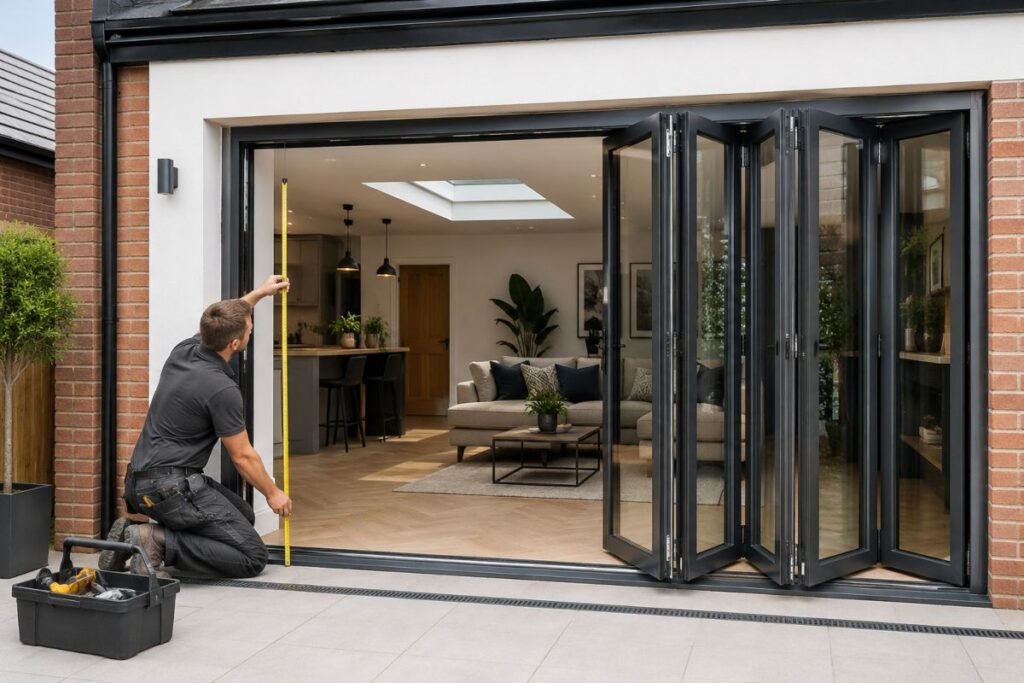
In the UK, installing bifold doors typically costs £1,500 to £5,000+, depending on the door size, number of panels, frame material, glazing, and labour costs. Smaller 2–3 panel systems are usually cheaper, while large aluminium bifold doors or structural opening work can significantly increase the total price.
Bifold doors have become one of the most requested home improvements in Britain over the last decade, and it is not hard to see why. They fold neatly away, open a room fully to the garden, and bring in a flood of natural light that a standard door or window simply cannot match. Before committing to the project, though, most homeowners want a realistic sense of what they are actually going to spend, and that figure can vary far more widely than many people expect.
This guide breaks down exactly what drives the price of a bifold installation, from the frame material and glazing to the labour involved in fitting, so you can budget with confidence rather than guessing.
What Determines the Final Price
Unlike many home improvements with a fairly predictable price range, bifold doors span an unusually wide spectrum depending on a handful of key decisions made early in the process.
Looking at the Overall Figure
Taken as a whole, the total bifold door installation cost includes the doors themselves, any structural work needed to widen an opening, and the labour required to fit everything correctly. A modest three panel set in a straightforward opening sits at the lower end of the market, while a large, six or seven panel run spanning an entire rear wall pushes costs considerably higher.
Why Panel Count Changes the Budget So Much
More panels mean more material, more hardware, and generally more time spent fitting everything precisely. A wider opening also often requires additional structural support above the doors, which can add noticeably to the overall project cost beyond the doors themselves.
Understanding Price by Panel or Set
Suppliers often quote a bifold door price per panel or set, which makes it easier to compare like for like when researching different configurations. This approach also helps homeowners understand how the total figure builds up as more panels are added to a run.
Typical configurations homeowners consider include:
- Three panel sets, suited to smaller openings or side returns
- Four panel sets, a popular middle ground for many rear extensions
- Five to six panel sets, ideal for wider openings across a full wall
- Seven or more panels, typically used for expansive open plan spaces
Comparing Interior and Exterior Installations
Bifold doors are not only used to connect a home with its garden. They are also increasingly popular indoors, dividing open plan living spaces or closing off a home office when needed.
The difference between interior vs exterior bifold door cost is usually significant, since exterior sets need to be weatherproof, thermally efficient, and secure enough to meet modern building standards, while interior versions can prioritise appearance and smooth operation without the same demands placed on insulation or weather sealing.
Why Exterior Sets Cost More
Weatherproofing, security hardware, and thermally broken frames all add cost to an exterior installation that simply are not necessary indoors. Building regulations also apply to exterior doors in a way that rarely affects a purely internal room divider.
Where Interior Doors Can Save Money
Without the need for weather sealing or enhanced security locking, interior bifold doors are often considerably cheaper per panel, making them an accessible way to reconfigure a living space without the expense of a full extension.
Breaking Down Material Costs
Frame material has perhaps the single biggest impact on price, and choosing between the main option’s available shapes both the initial cost and the long-term durability of the finished doors.
Understanding bifold door materials such as wood, glass, and aluminium helps homeowners see exactly where their money is going. Timber frames bring natural warmth and character but generally sit at the higher end of the price range, particularly for hardwood options. Aluminium strikes a popular balance between slim, contemporary sightlines and genuine long-term strength, while uPVC remains the most budget friendly choice for homeowners prioritising value over premium appearance.
The Role of Glazing in the Overall Price
Glass quality varies considerably between products, and upgrading to triple glazing, solar control coatings, or acoustic glass all add to the final figure. For properties in noisy or particularly cold locations, this additional spend often proves worthwhile in everyday comfort.
Hardware and Finishing Touches
Handles, hinges, and locking mechanisms might seem like a minor detail, but premium hardware genuinely affects how smoothly the doors operate over years of daily use, and better-quality components are generally worth the modest extra cost involved.
What You Are Actually Paying for in Labour
Materials only make up part of the overall bill, and it is easy to underestimate just how much skilled fitting contributes to a successful installation.
Bifold door labour cost depends heavily on the complexity of the opening, whether structural work is needed to widen or reinforce it, and how experienced the fitting team happens to be. A straightforward replacement into an existing opening cost considerably less to fit than a brand-new opening cut into a solid wall, which may require additional structural support and building control sign off.
Structural Work and Building Regulations
Widening an existing opening or creating a new one from scratch often involves a structural engineer, a steel lintel, and building control approval. These additional stages add meaningfully to both the cost and the timescale of a project beyond the doors themselves.
Why Experienced Fitters Are Worth the Investment
Bifold doors rely on precise alignment to operate smoothly, and a poorly fitted set can stick, drag, or fail to seal properly against draughts. Choosing an experienced installer over the cheapest available quote tends to save money in the long run by avoiding costly adjustments or repairs later.
Hidden Costs Worth Budgeting For
Beyond the headline figure quoted by a supplier, several additional costs can catch homeowners by surprise if they are not factored into the budget from the outset.
Items worth considering alongside the main quote include:
- Making good internal plaster and external brickwork around the new opening
- Repositioning radiators, sockets, or light switches near the doors
- Flooring adjustments where thresholds change between rooms
- Disposal of old doors, frames, or excess rubble from structural work
Getting Accurate Quotes
Because so many variables affect the final price, the only reliable way to budget accurately is to get several detailed quotes based on the exact specification you have in mind, rather than relying on rough figures found online.
RR Double Glazing typically offer a home measure and consultation, allowing homeowners to compare frame materials, glazing options, and panel configurations side by side before committing to a final specification and price.
Final Thoughts
There is no single answer to what bifold doors cost, since the final figure depends on panel count, frame material, glazing choice, and the complexity of the opening itself. Understanding each of these factors before requesting quotes puts homeowners in a much stronger position to compare offers fairly and avoid unwelcome surprises once the work actually begins. With the right information in hand, budgeting for this popular home improvement becomes far less daunting.
Frequently Asked Questions
Are bifold doors more expensive than sliding patio doors?
Generally, yes, since bifold doors involve more individual panels, hinges, and hardware than a typical sliding door set. The wider, fully opening result often justifies the extra cost for homeowners wanting maximum access to a garden or patio.
Does the direction bifold doors fold affect the price?
Not significantly on its own, though the chosen configuration can influence which track and hardware options are needed, which may have a small impact on the overall quote depending on the supplier.
How long does a typical bifold door installation take?
A straightforward replacement into an existing opening can often be completed within a day, while projects involving structural changes to widen or create an opening typically take considerably longer, sometimes spanning several days.
Can I fit bifold doors myself to save on labour costs?
It is technically possible for a confident DIY enthusiast, though precise alignment is essential for smooth operation, and any structural changes to the opening genuinely require professional involvement and building control approval.
Do bifold doors add value to a property?
Many estate agents consider bifold doors a desirable feature, particularly when connecting a kitchen or living space to a garden, and a well fitted set can genuinely enhance a property’s appeal to future buyers.
Is aluminium always more expensive than uPVC for bifold doors?
Generally, yes, aluminium tends to cost more per panel than uPVC, reflecting its slimmer sightlines and greater structural strength, though the exact difference varies between suppliers and specifications.
Will I need planning permission to install bifold doors?
Most bifold door installations fall under permitted development and do not require planning permission, though this can vary depending on the property type, location, and whether the work is part of a larger extension project.