
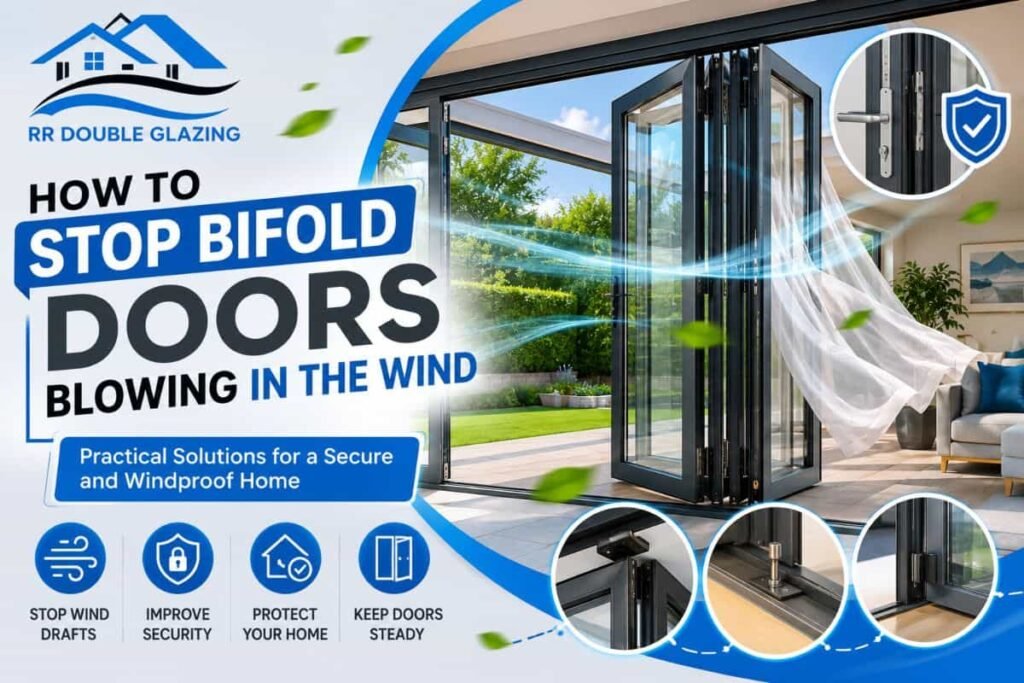
To stop bifold doors blowing in the wind, use a door retainer or magnetic holder, lock the doors in the open position, keep the tracks clean, maintain rollers and hinges, and avoid leaving the doors partially open during strong winds. These simple steps help prevent slamming, improve safety, and protect your bifold doors from damage.
Bifold doors are one of the most popular home improvements in the UK, offering uninterrupted garden views, increased natural light, and a seamless connection between indoor and outdoor living spaces. However, many homeowners experience one frustrating issue, especially during windy weather: bifold doors blowing in the wind.
Strong gusts can cause the doors to swing unexpectedly, slam shut, or even open further than intended. Not only is this inconvenient, but it can also pose safety risks, damage the door system, and reduce the lifespan of the hardware.
Fortunately, there are several effective ways to stop bifold doors blowing in the wind. Whether your doors are aluminium, uPVC, or timber, this guide explains the causes, practical solutions, maintenance tips, and preventative measures to keep your bifold doors secure in all weather conditions.
Why Do Bifold Doors Blow in the Wind?
Before fixing the problem, it helps to understand why it happens.
Bifold doors are designed to fold and glide smoothly along a track. When left partially open, they create a large surface area that catches the wind. Even moderate breezes can generate enough force to move the door panels.
Several factors make the problem worse, including:
- Lightweight door panels
- Strong prevailing winds
- Incorrect installation
- Worn rollers or hinges
- Loose locking mechanisms
- Uneven tracks
- Doors left unsecured
The larger the opening, the more wind pressure builds against the doors.
Is It Dangerous?
Yes, it can be.
A bifold door that suddenly slams shut or swings open unexpectedly can cause:
- Injuries to hands and fingers
- Broken glass
- Damaged hinges
- Bent tracks
- Frame misalignment
- Costly repairs
If you regularly experience windy conditions, addressing the issue early is essential.
Use the Traffic Door Whenever Possible
Most bifold systems include a traffic door, which functions like a normal external door.
Instead of opening the entire bifold system on breezy days, use the traffic door for quick access.
This significantly reduces the amount of surface exposed to the wind and minimises unwanted movement.
Install Magnetic Door Holders
One of the simplest solutions is fitting magnetic door holders.
These devices hold the door firmly in its open position using a strong magnet.
Benefits include:
- Prevents doors from swinging freely
- Easy to operate
- Affordable
- Suitable for most bifold systems
- Minimal maintenance
They are particularly useful for homes with gardens, patios, and outdoor entertaining spaces.
Fit Heavy-Duty Door Stops
Door stops prevent the panels from travelling beyond a safe point.
Unlike standard door stops, heavy-duty versions are specifically designed to withstand greater force.
They help:
- Absorb impact
- Reduce slamming
- Protect hinges
- Prevent frame damage
Ensure the door stop is securely fixed to a solid surface.
Lock the Doors into Their Open Position
Many modern bifold systems include intermediate locking points.
These allow the doors to remain securely open without moving.
Always check whether your system has this feature before leaving the doors unattended.
If your doors lack this function, consult a professional installer about possible upgrades.
Install Wind Brakes or Door Retainers
Wind brakes are specifically designed to control door movement.
These mechanisms slow the speed at which the doors move and prevent sudden swings caused by gusts.
Advantages include:
- Better control
- Improved safety
- Reduced wear
- Longer hardware lifespan
They are especially beneficial in coastal or exposed locations.
Keep the Bottom Track Clean
A dirty track can prevent smooth operation.
Leaves, stones, dust, and debris increase friction, making the doors unstable.
Regularly:
- Vacuum the track
- Remove dirt
- Wipe with a damp cloth
- Check drainage holes
A clean track allows the rollers to glide correctly, reducing unexpected movement.
Lubricate Moving Components
Friction increases when rollers and hinges become dry.
Use a manufacturer-approved lubricant on:
- Rollers
- Hinges
- Pivot points
- Locks
Avoid excessive lubrication, as this attracts dirt.
Proper lubrication ensures smooth movement and reduces stress on the hardware.
Inspect the Rollers
Damaged rollers can cause uneven movement.
Signs include:
- Jerky operation
- Grinding noises
- Difficulty opening
- Doors not sitting level
Replacing worn rollers restores smooth operation and improves stability.
Check the Hinges
Loose hinges allow panels to move independently.
Inspect for:
- Loose screws
- Corrosion
- Excessive play
- Bent components
Tightening or replacing worn hinges often resolves movement issues.
Adjust the Door Alignment
Even slight misalignment increases the chance of the wind catching the doors.
Professional adjustment ensures:
- Even spacing
- Smooth operation
- Proper locking
- Reduced strain
Never force a misaligned door, as this can damage the track.
Avoid Leaving Doors Half Open
Many homeowners leave bifold doors partially open for ventilation.
Unfortunately, this is when they are most vulnerable.
A partially opened panel behaves like a sail.
Instead:
- Fully open and secure the doors.
- Or keep them fully closed.
This simple habit greatly reduces wind-related problems.
Consider Soft-Close Mechanisms
Soft-close systems slow the final movement of the doors.
Benefits include:
- Prevent slamming
- Reduce noise
- Improve safety
- Protect glass
Many newer bifold systems include this feature, while older systems can often be upgraded.
Install a Door Restrictor
Door restrictors limit how far the panels can open.
They are particularly useful for:
- Homes with children
- Exposed properties
- Apartments
- Coastal locations
Restrictors reduce excessive movement during strong winds.
Improve the Surrounding Landscaping
Strategic landscaping can reduce wind pressure around your property.
Examples include:
- Hedges
- Decorative fencing
- Privacy screens
- Trees
These barriers slow the wind before it reaches the doors.
Ensure planting does not interfere with drainage or sunlight.
Check Weather Seals
Damaged seals allow drafts and increase wind pressure.
Inspect for:
- Cracks
- Gaps
- Shrinkage
- Loose sections
Replacing worn seals improves both insulation and door stability.
Schedule Regular Maintenance
Routine maintenance prevents small issues becoming expensive repairs.
Inspect every six months for:
- Roller wear
- Lock performance
- Handle movement
- Track cleanliness
- Hinge condition
- Seal integrity
Professional servicing keeps bifold doors performing at their best throughout the year.
Common Mistakes to Avoid
Many homeowners unintentionally make the problem worse.
Avoid these mistakes:
- Leaving doors unsecured
- Ignoring unusual noises
- Using excessive force
- Skipping maintenance
- Allowing dirt to build up
- Delaying repairs
Early intervention saves money and extends the life of your bifold doors.
When Should You Call a Professional?
DIY maintenance is suitable for cleaning and basic inspections.
However, seek professional assistance if you notice:
- Doors dropping
- Broken rollers
- Cracked glass
- Bent tracks
- Faulty locks
- Persistent misalignment
An experienced installer can accurately diagnose and repair the problem before further damage occurs.
At RR Double Glazing, homeowners understand the importance of professional installation, routine maintenance, and quality hardware to ensure bifold doors remain secure, smooth, and reliable throughout every season.
Final Thoughts
Learning how to stop bifold doors blowing in the wind is largely about prevention, maintenance, and using the correct accessories. Simple improvements such as magnetic retainers, door stops, clean tracks, properly adjusted rollers, and secure locking mechanisms can make a significant difference.
Regular inspections also help identify worn components before they become major issues. Combined with good operating habits and professional servicing when required, these practical measures will keep your bifold doors functioning safely and efficiently for many years.
Whether you live in an exposed rural location or experience occasional strong winds, taking these preventative steps will protect your investment while making your home safer and more comfortable.
Frequently Asked Questions
How do I stop my bifold doors from blowing in the wind?
The most effective methods include installing magnetic door holders, using heavy-duty door stops, securing the doors in their locked open position, fitting wind brakes, and avoiding leaving the doors partially open during windy weather.
Why do bifold doors slam shut when it's windy?
Wind creates pressure against the large surface area of the door panels. If the doors are not properly secured or the hardware is worn, gusts can force the panels to swing or slam shut unexpectedly.
Can strong winds damage bifold doors?
Yes. Repeated exposure to strong winds can damage hinges, rollers, tracks, locks, and even the glass if the doors repeatedly slam open or closed.
Should bifold doors be left open in windy weather?
It is best to avoid leaving bifold doors partially open during strong winds. Either fully secure them in the open position using retainers or keep them completely closed.
Do bifold doors need regular maintenance?
Yes. Cleaning the tracks, lubricating moving parts, checking hinges, inspecting seals, and ensuring correct alignment help maintain smooth operation and prevent wind-related issues.
Can I install door retainers on existing bifold doors?
In most cases, yes. Many magnetic retainers, door stops, and wind brakes can be retrofitted to existing bifold door systems by a professional installer.