
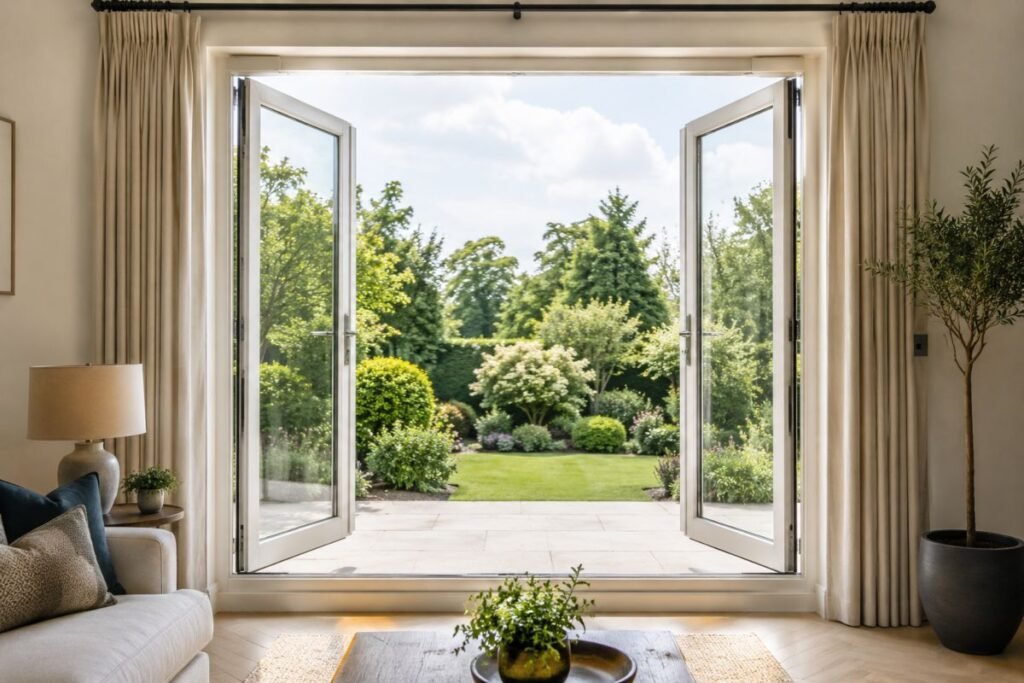
A French casement window is a window style featuring two side hung sashes that open outward from the centre, much like traditional French doors, with no central mullion obstructing the view. This design offers a wide, unobstructed opening, excellent ventilation, and a classic, elegant appearance that suits both period and contemporary homes.
What Is a French Casement Window? A Complete Guide
Walk through almost any British street with a mix of period cottages and newly built homes, and you will spot a wide variety of window styles. Among them, one design consistently stands out for its elegance and practicality, the French casement window. Despite being a familiar sight, many homeowners are not entirely sure what sets this style apart from other casement options on the market, or why it has remained so popular for generations.
This guide walks through exactly what defines this window style, how it works, where it performs best, and what to consider before choosing it for your own home.
Understanding the Basic Design
At its core, this window style consists of two sashes hinged on opposite sides of the frame, each opening outward from the centre. Unlike many other window types, there is no central post or mullion standing between the two panels once they are open. This creates a wide, completely unobstructed opening that closely resembles a set of doors rather than a conventional window.
The name itself borrows directly from French doors, which follow the same basic principle on a larger scale. Where French doors open a wall to a garden or balcony, this window style brings the same generous opening and elegant symmetry to a smaller frame, making it a popular choice for kitchens, dining rooms, and any space where light and airflow matter.
How These Windows Actually Work
Each sash is fitted with hinges along its outer edge, allowing it to swing outward much like a door. When both sashes are opened fully, the entire window space becomes available, offering considerably more ventilation than a single hinged panel or a sliding sash design typically provides.
Opening and Closing Mechanisms
A handle mounted on one sash usually controls the locking mechanism, drawing the window firmly shut against weather seals when closed. Many modern versions include multi point locking systems that engage at several places along the frame, significantly improving security compared to older single point designs.
The Role of the Meeting Stiles
Where the two sashes meet in the centre, specially shaped meeting stiles interlock to create a weathertight seal once closed. This detail is crucial to the design, since it allows the window to open completely free of a central post while still closing securely against draughts and rain.
For those researching hardware options, it is worth noting that a crank casement window uses a geared handle to open the sash outward smoothly, and this same mechanism is commonly adapted for use in French style frames to make everyday operation effortless, particularly for larger or heavier sashes.
Why Homeowners Choose This Window Style
Beyond its attractive appearance, this window style offers a genuinely practical set of benefits that explain its enduring popularity across so many different property types.
Excellent Ventilation and Airflow
Because both sashes open fully, this design allows a significant volume of air to pass through a room, making it particularly well suited to kitchens, bathrooms, or any space prone to condensation and stuffiness. On a warm summer evening, the difference in airflow compared to a smaller opening window is genuinely noticeable.
Unobstructed Views
With no central mullion when open, and often a slim central detail even when closed, this style offers clearer views out into a garden or street than many alternative designs. For rooms overlooking an attractive outdoor space, this uninterrupted sightline adds real value to daily life.
A Timeless, Elegant Appearance
The symmetrical, door like proportions of this window style bring a sense of classic elegance to a property, whether it sits within a period cottage or a contemporary new build. It manages to feel both traditional and clean lined at once, which explains why it continues to suit such a broad range of architectural tastes.
Comparing This Style to Other Casement Options
Casement windows come in several variations, and understanding the differences helps homeowners choose the option best suited to a particular room or property style.
A double casement window typically refers to two side hung sashes within a single frame, which shares some similarity with the French style but often retains a central mullion rather than opening completely clear. This subtle difference affects both the amount of unobstructed opening and the overall visual symmetry of the finished window.
It is also worth understanding how this design compares to sash style alternatives. The debate around casement vs double-hung windows often comes down to ventilation control and cleaning convenience, since sliding sash designs open vertically rather than outward, offering a different balance of airflow, safety, and ease of maintenance depending on a household’s particular priorities.
Materials and Frame Options
This window style can be manufactured in several different frame materials, each bringing its own balance of appearance, cost, and long-term performance.
Common frame material choices include:
- uPVC, valued for affordability and minimal ongoing maintenance
- Timber, prized for natural warmth and traditional character
- Aluminium, known for slim sightlines and long-term strength
- Composite frames blending timber’s appearance with aluminium’s durability
Thinking About Energy Efficiency
Modern versions of this window style perform impressively well when it comes to keeping heat in and draughts out, provided they are properly specified and fitted. Energy-efficient casement windows rely on a combination of quality glazing, insulated frames, and carefully engineered seals to minimise heat loss throughout the colder months.
The Importance of Proper Sealing
Because this design relies on the two sashes meeting cleanly in the centre, precise manufacturing and installation are essential for maintaining a genuinely draught free seal. A poorly fitted window of this style can perform noticeably worse than a well-made alternative, even if the glazing specification itself is identical.
Choosing Glazing for Better Performance
Double or triple glazed units filled with inert gas between the panes significantly improve thermal performance compared to older single glazed versions. Pairing quality glazing with a well-insulated frame ensures the finished window performs efficiently across every season rather than only looking good.
Where This Window Style Works Best
While suitable for almost any room, certain spaces particularly benefit from the wide opening and elegant proportions this design offers.
Kitchens overlooking a garden, dining rooms used for entertaining, and bedrooms seeking generous natural light all tend to suit this style especially well. Its door like appearance also makes it a popular choice for ground floor rooms where a strong visual connection to an outdoor space is particularly desirable.
Choosing a Trusted Supplier
Given how much proper manufacturing and installation affect the finished performance of this window style, choosing an experienced, reputable supplier matters considerably. Comparing warranty terms, glazing specifications, and customer reviews helps homeowners avoid disappointment further down the line.
Established names such as RR Double Glazing have built a reputation for combining traditional window styles with genuinely modern performance, offering homeowners the classic look they want alongside the energy efficiency and security that today’s properties demand.
Final Thoughts
Understanding what defines this elegant window style makes it far easier to decide whether it suits a particular room or property. With its wide, unobstructed opening, excellent ventilation, and timeless appearance, it continues to earn its place as one of the most enduringly popular window choices in British homes, whether fitted to a period cottage or a brand-new build.
Frequently Asked Questions
Is a French casement window the same as a French door?
No, although they share a similar design principle. Both feature two side hung panels opening outward from the centre, but a door reaches floor level and provides access, while the window sits higher within the wall and is designed purely for light and ventilation.
Can this window style be fitted to an older or period property?
Yes, and it often suits period properties particularly well. Timber framed versions in particular are commonly chosen for listed buildings or conservation areas, since the style closely matches the proportions and character found in many traditional homes.
How much ventilation does this window design actually provide?
Considerably more than many alternative styles, since both sashes open fully outward with no central obstruction. This makes it especially effective in kitchens, bathrooms, or any room where quick, thorough airflow helps reduce condensation and improve comfort.
Is this window style secure enough for a family home?
Modern versions are generally very secure, particularly when fitted with multi point locking systems that engage at several points along the frame. Choosing a reputable supplier with proper security certification ensures the finished window meets current safety expectations.
Does this window style cost more than other casement options?
Pricing varies depending on frame material, glazing specification, and size, but the two-sash design does not automatically cost significantly more than other casement styles. Timber versions tend to sit at the higher end, while uPVC options are generally the most affordable.
How easy is this window style to clean and maintain?
Since both sashes open fully outward, cleaning the exterior glass is usually straightforward without needing to reach outside the property. Regular maintenance mainly involves checking seals, lubricating hinges occasionally, and wiping down frames a few times a year.
Can these windows be combined with other window styles in the same property?
Absolutely, many homeowners mix this style with sliding sash or single casement windows elsewhere in the property, choosing whichever design suits each individual room best while maintaining a broadly consistent overall appearance across the home.